
SECTORS IN FOCUS
The US-Japan relationship
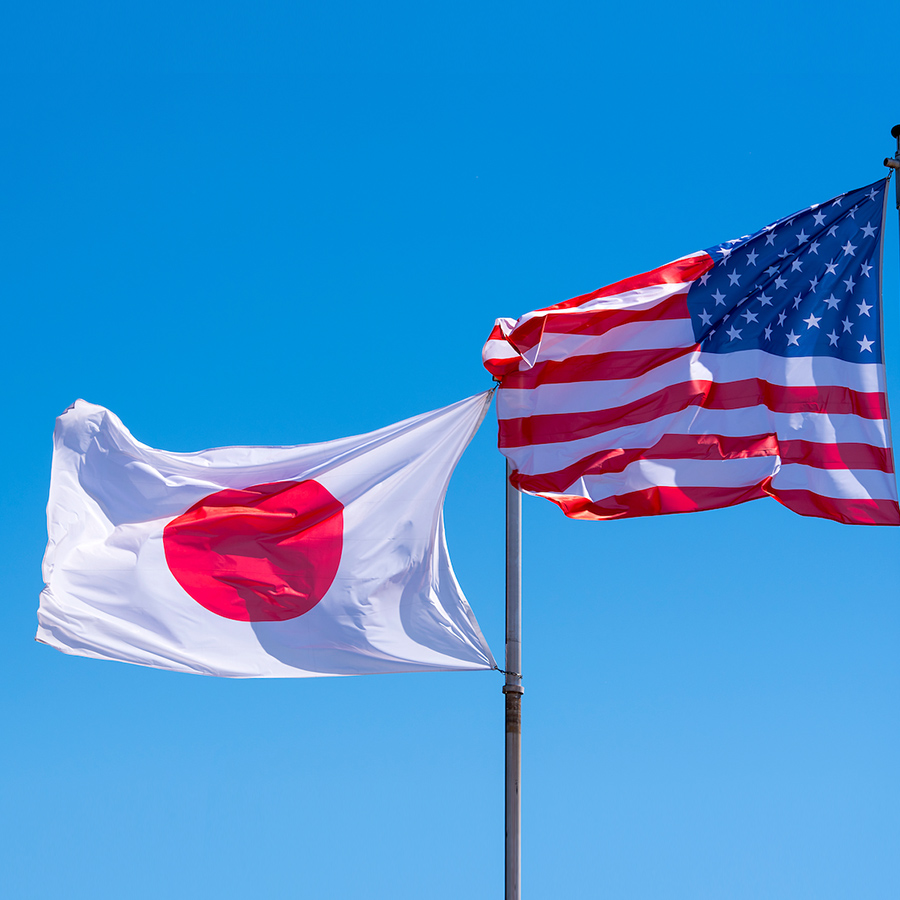
In a period of serious geopolitical change, relations between Japan and the US remain an example of strong and long-lasting economic cooperation. Over the past seventy years, these two nations have developed not only close business ties but also deep friendships, which are now entering a true “Golden age.”
As historical allies, Japan and the US maintain mutually beneficial interests in politics, commerce and global trends, supporting each other’s progress. The US continues to be Japan’s largest export market, accounting for approximately 18-20% of all overseas shipments. In 2024, total trade between the nations reached US$317 billion. That same year, Japan proved itself the major foreign investor in the US, contributing more than $750 billion to the American market.
The recent trade and investment agreement signed in July 2025 marks a new chapter in the alliance’s history. Already heralded as a key milestone in Japan-US relations, it is set to promote business opportunities and expand cooperation in strategic sectors, further strengthening the unique relationship between the two global powers.
Advanced manufacturing and technology leadership
Japan is practically synonymous with innovation and tech excellence. Traditionally associated with cutting-edgetechnologies, the Japanese manufacturing landscape is currently undergoing a major transformation to stay at the forefront of global industrial progress.
Japan has long been known worldwide as one of the greatest exporters and importers of goods and a leading industrial power. The manufacturing sector reportedly accounts for over 20% of the national GDP. Japan‑origin corporations inautomotive, electronics and machinery sectors are established global pacesetters. Today, they are spearheading the tech revolution, actively introducing robotics to increase productivity and precision.
By the end of 2025, Japan’s industrial robotics sector has represented 40% of JJaoan. Together with AI, Industrial IoT and digital twins, robotics forms one of the world’s largest Industry 4.0 markets that is projected to reach US$50-60billion by 2030.
Moving beyond manufacturing, advanced production systems are permeating all sectors of the Japanese economy. The country is actively strengthening its supply chains, attracting investment and redefining its mission as a global industrial leader for the years to come.


Tertiary sector as economic backbone
Among Japan’s numerous competitive advantages, there is one area that stands out as a key economic backbone – the tertiary sector. Accounting for about 70% of Japan’s GDP, services are central to national resilience and sustained progress.
With strong banking, insurance and real estate industries leading the way, the services sector is poised to reinforce the country’s status as a global economic hub. Japanese financial institutions rank among the largest in the world, six out of them are named among the 26 Fortune Global 500 headquartered in Tokyo. Also home to the world’s third-largest equity market, iconic Japanese retail brands, numerous SMEs and universities, Tokyo is a true megacity of immense business potential. By 2050, it aims to become an international financial capital, with sustainability and high technology as priority development areas.
Buoyed by strong domestic demand and a constant increase in new orders, services saw the fastest ever growth in 2025. With new investments and foreign capital inflows, Japan’s tertiary sector is poised for even greater expansion – providinga solid foundation for the country’s ongoing transformation.
Japan’s Tourism Boom
One can hardly imagine a destination so desirable as Japan. From seasoned travellers to first-time visitors, everyone seems captivated by Japan’s unique blend of ultra-modern metropolises, serene temples, mouthwatering culinary experiments and centuries-old traditions. Not to mention the sakura bloom that annually draws millions of travellers to the “Blossom Kingdom.”
With so many wonders to offer, it is not surprising that Japan’s tourism sector constantly reaches new heights. In 2025, Japan set a second consecutive record by welcoming 42.7 million tourists, and total tourism spending surpassed US$12 billion each quarter. As this trend continues, Japan is well–positioned to achieve the government’s goal of welcoming 60 million tourists by 2030.
Guided by the core philosophy of omnitenashi, a deep commitment to providing exceptional service to guests, Japan’s tourism infrastructure is continuously evolving through digital innovation and a focus on sustainability. Modernized facilities and expanding connectivity provide exceptional opportunities for visitors to experience an authentic Japan and set a global standard for tourism excellence.

Environmental vision
While each country charts its own path toward sustainability, Japan stands out as an inspiring example of progress built on a profound respect for nature, communities and traditions.
Sustainability is deeply rooted in the very Japanese culture, which has historically emphasized a mindful approach to others and the planet at large. Currently, this mindset is most vividly reflected in Japan’s priorities and nationwide policies. In 2024, Japan became the first country in the world to issue sovereign climate transition bonds, raising significant funds to support decarbonization efforts across major economic sectors. The government initiatives are further supported by an active private sector. Japanese corporations lead globally in green technologies, contributing significantly to Japan’s commitment to achieve net-zero greenhouse gas emissions by 2050.
Determined and united in achieving the goal, Japanese society strives to protect and sustainably manage its rich ecological assets – the diversity of climate zones, dense forests and vast marine resources – to address pressing challenges. Its success proves that lasting progress comes from working in harmony with nature, not against it.
High standard of living: healthcare, infrastructure etc.
Japan confidently heads the lists of the world’s most desirable countries for living. It holds second place in global quality‑of‑life rankings. Its people are regularly cited as having the highest life expectancy. And its capital, Tokyo, stands as the top “workcation” city, thanks to its advanced infrastructure and exceptionally safe urban environment. Such strong performance is no coincidence, as Japan has long invested in enhancing the quality of life at every level. Prioritizing durability with social and environmental responsibility, Japan has made significant advances in quality infrastructure investments to ensure lasting economic benefits. Its network of transport and communication systems goes above and beyond ordinary development. Simultaneously, another key pillar of Japan’s economy – construction – is setting global standards in safety. While the sector is experiencing solid growth at a CAGR of 6.9% and is projected to reach over US$620 billion in revenue by 2030, worker and community protection remains integral to every process and reflects a strong cultural commitment. Japan’s healthcare system is universally accessible and technologically advanced. Focused predominantly on preventive medicine, it mirrors the Japanese mentality: disciplined, responsible and knowledgeable. After all, it is these qualities that make these sectors so prosperous and the country so pleasant to live in.