
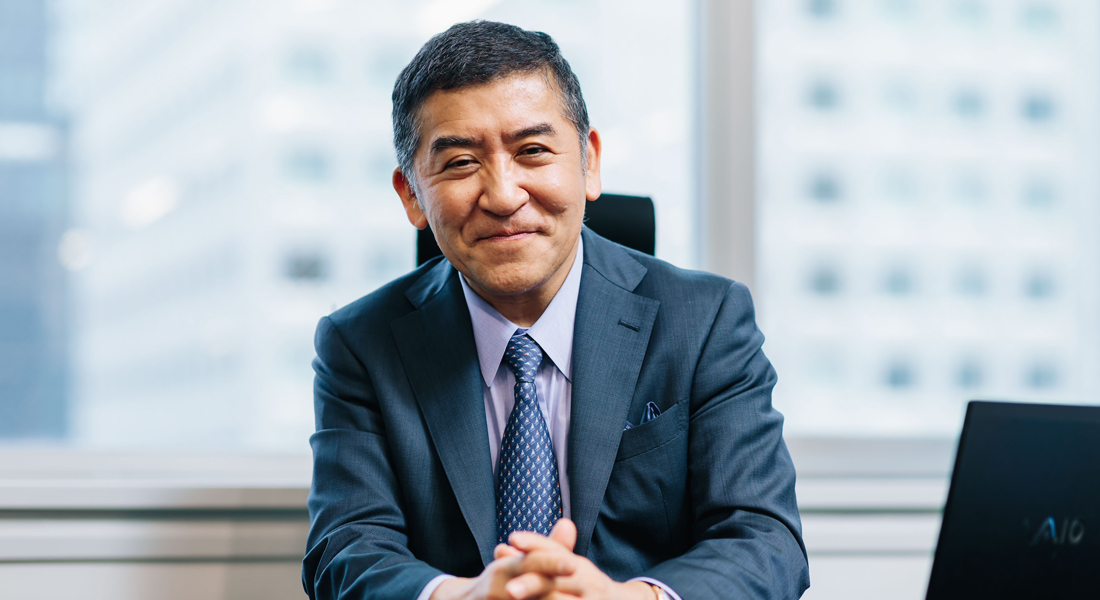
16 Mar Interview with Mr. Motokuni Takaoka, Founder & CEO of Airweave
What is Airweave’s core mission, and how have its founding values shaped the company’s long-term commitment to improving sleep quality and well-being worldwide?
TAKAOKA: I founded Airweave in 2007 after taking over my uncle’s struggling plastic injection-molding company, which had a unique technology capable of producing the material now known as Airfiber®. After a traffic accident injured my neck and while studying at Stanford University, I became very aware of how important sleep quality is. When I rediscovered this material, I realized it could transform bedding. That led me to create Airweave. Our mission has never been simply to sell bedding, but to deliver better sleep.
From a scientific perspective, traditional coil mattresses are limited because the human body is three-dimensional while coil springs provide only one-dimensional support. Fiber structures can distribute weight more evenly and reduce pressure, which gives Airweave a unique position in the bedding market.
From the beginning, my goal was not rapid expansion, but building trust with customers who understood the value of better sleep. Athletes quickly became some of our most committed users because recovery is critical to performance. In 2008, just one year after the company was founded, members of the Japanese Olympic team used Airweave and won medals at the Beijing Games.
Over time, major partners adopted our products, including Japan Airlines, Ritz Paris and Hôtel Hermitage Monte-Carlo. In 2020, we became an official partner of the Tokyo Olympic Games, supplying 18,000 mattresses for the Olympic Village and developing the customizable Three-Block Mattress to support proper spinal alignment.
Research with Stanford University showed that Airweave lowers core body temperature more effectively than memory foam, leading to deeper sleep in the first two hours; those findings were published in PLOS ONE in 2018. Further research at IMG Academy in Florida involving 500 athletes found measurable next-day performance improvements, including in sprint, jump and agility tests, and was published in 2020.
These results helped lead to our adoption at Tokyo 2020 and later our partnership with the French Olympic Committee for Paris 2024, where we supplied all bedding for the Olympic Village. Today we support athletes from more than 20 countries, and in the United States we support the Stanford women’s swimming team and collaborate with Stanford and UCLA on sleep research.
Ultimately, our goal remains the same: to apply scientific research and innovative materials to improve sleep quality for athletes and everyday consumers alike.
What product innovations or focus areas will you prioritize as you look toward the 2028 Los Angeles Olympics?
TAKAOKA: Some sponsorships for LA 2028 are already in place. In Paris we supplied mattresses for all Olympic athletes, but for 2028 the Olympic Village will be at UCLA and some bedding decisions are still open. What is certain is that we are already supporting several National Olympic Committees for Milano Cortina and will continue supplying Olympic teams, as sleep is a key factor in performance. We also support individual athletes, not only national teams.
Milano Cortina is an important bridge to LA 2028 as we move from event-based support toward longer-term partnerships with athletes and National Olympic Committees such as Team Japan and Team Canada. These relationships extend beyond the Games themselves, supporting athletes during preparation, competition and afterward when many continue using our products at home. That long-term trust is creating strong momentum toward LA 2028.
You recently opened a flagship store in Los Angeles – why did you choose this location, and what are your priorities for expanding in the U.S. market?
TAKAOKA: California has a strong culture around health, wellness and environmentally sustainable products. Airweave is not only for athletes but for anyone who wants a healthier and more active life, including artists, performers and everyday consumers. Our mattresses are washable, breathable and hygienic, which is important because traditional mattresses cannot be washed and are often used for many years.
Sustainability is equally important. Conventional mattresses are difficult to recycle, but Airweave can be fully recycled by chopping, melting and remolding the material without waste. From the beginning, I wanted to create a product that is good for people and for the environment.
Looking ahead, what are Airweave’s key strategic priorities and how do you envision the brand’s long-term global expansion?
TAKAOKA: We opened our flagship store in Santa Monica to connect with customers who share our values. From the beginning, I have been selective about our partners and customers, starting with Olympic athletes and high-end hotels such as Nobu in Los Angeles that serve discerning guests. Our goal is not rapid expansion or industry domination.
Instead, we focus on sharing the value of quality sleep with people who appreciate it. Growth takes time, as it did in Japan, but we believe understanding will follow. Through customizable, hygienic and environmentally sustainable mattresses, our mission is to help people live better through better sleep.
What is your final message for our readers of USA Today?
TAKAOKA: We are not just selling bedding; we are delivering quality sleep. Airweave brings nearly 20 years of experience beginning in Japan and supporting Olympic teams, top athletes and hospitals. Opening our first store in the United States before 2020 was an important step for us. While we began by supporting elite athletes, our mission has always been quality sleep for everyone. One achievement we are especially proud of is supplying bedding to leading hospitals and maternity clinics in Japan, including bedding designed for newborns.
Sorry, the comment form is closed at this time.